
Teja or Sannam?
These are not interchangeable, and choosing by price alone usually means choosing wrong.
| Variety | Heat | Colour | Typically bought for |
|---|---|---|---|
| Teja (S17) | High | Moderate | Pungency-led blends, capsaicin extraction |
| Sannam (S4) | Medium | Good | General grinding, powder and flakes |
Teja is the hot one and the variety most often specified where the finished product has to register as spicy. Sannam is the workhorse of the ground-chilli trade — enough heat to matter, enough colour to look right, and consistent enough to blend against.
If you need colour without heat, neither is the answer: that is Byadgi, grown in Karnataka.
Harvest, Drying and Grading
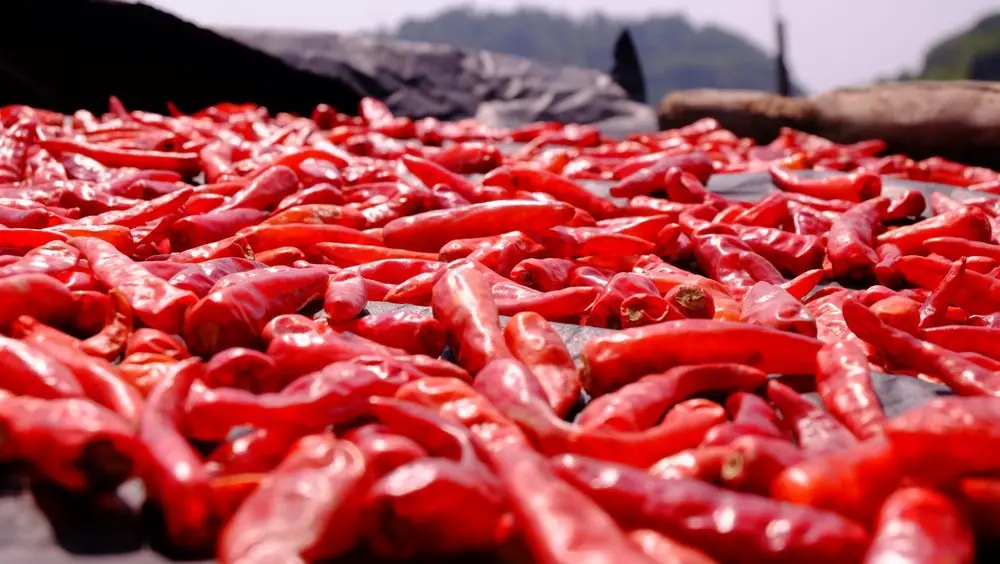
Guntur chilli is picked ripe-red between February and April, then sun-dried on open yards for five to eight days to 10–11% moisture, turned daily so the colour develops evenly rather than scorching on one side.
After drying, pods are stemmed, hand-sorted to remove discoloured and broken material, and graded by size and variety. Stem-cut and stemless are both available; stemless costs more to produce but lifts your usable yield at the mill and cuts the foreign-matter deduction.
Every lot is tested for Scoville heat, ASTA colour, aflatoxin and Sudan dyes before packing — Indian chilli attracts additional scrutiny at EU borders, and the time to find a problem is before the container is sealed.